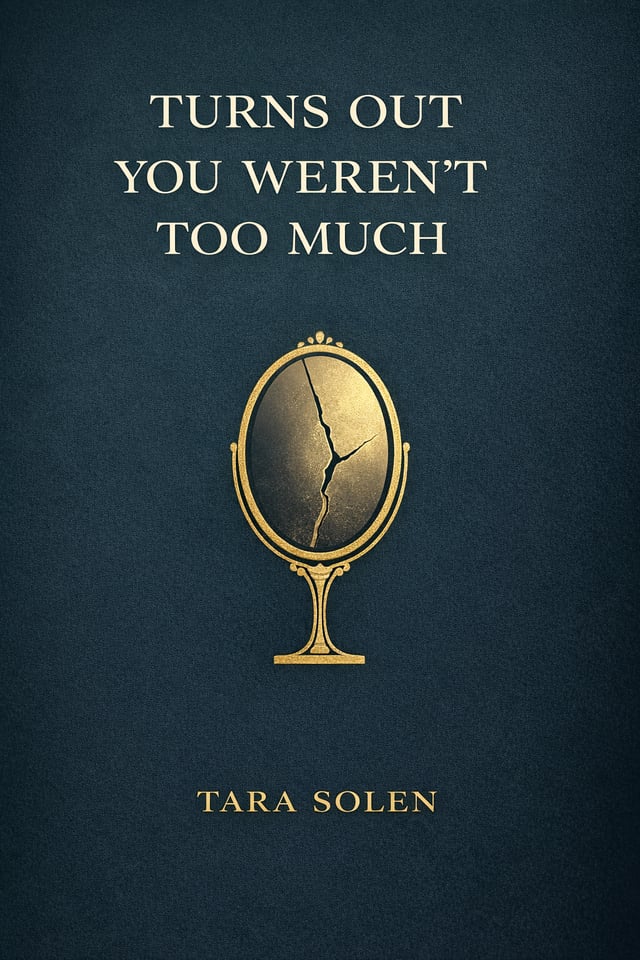
Turns Out You Weren't Too Much.He was too little.
A not-so-gentle reminder for every woman who's ever played therapist, maid, manager and emotional support human while her partner coasted on weaponized incompetence and "chill guy" energy. Your guide to surviving emotional neglect and reclaiming your life — by Tara Solen, Masters of Psychology.
Six "oof" moments. Tell me if any of these landed.
The kind of relationship where you weren't dramatically mistreated — you were just… doing everything. Carrying everything. Explaining everything. While he coasted on the bare minimum and you called it love.
You realised you were alone in bed next to someone.
Physically present. Emotionally gone. The loneliest version of partnered. And you kept thinking it was your job to fix it.
You were the manager, maid, therapist and emotional support human.
You handled the calendar, the kids, the family, the feelings, the fights, the apologies — while he coasted on "I'll try harder."
You were gaslit into gratitude for the bare minimum.
He took the bins out and you cried because it felt like effort. That's not love. That's the floor.
You were auditioning for partnership.
Performing, accommodating, shrinking, softening, anticipating — hoping that if you got the part exactly right, he'd choose you on purpose. He never did. Because the role didn't exist.
You decoded his "I'll try harder" like a forensic analyst.
You parsed the tone. Counted the pauses. Read the texts. Forwarded them to your group chat. The translation never changed: he was not going to.
You whispered "enough" through mascara and unmatched socks.
Not in a movie scene. Not on a date night. On a Tuesday. And in that moment you knew: he didn't leave. You just finally stopped staying.
If any of those landed — you weren't too much. You were the only one doing the work. This is the book that names every form of it. And then helps you stop doing it.
Three terms that explain the entire pattern.
If you're searching for the language, here it is. The book unpacks each one in full — including the science of why they happen and exactly how to stop participating in them.
Emotional Neglect
The pattern of being physically present in a relationship while emotionally checked out — no curiosity, no repair, no real care for your inner world.
It's not abuse with bruises. It's the slow erosion of feeling seen, valued and met. You keep wondering if you're imagining it. You're not.
Weaponized Incompetence
When a partner deliberately performs uselessness — at chores, at emotional repair, at the basic logistics of adult life — so that you stop asking and start doing it yourself.
It looks like "I don't know how to do it the way you like" or "you're better at this stuff." It's not incompetence. It's strategy.
The Audition for Partnership
The exhausting performance of being chosen on purpose — doing the unpaid emotional labour, softening your edges, anticipating his needs, hoping that if you get the part exactly right, he'll finally pick you.
The role doesn't exist. The job was never open. The book gives you permission to walk off the stage.
Gaslit Into Gratitude
The cycle where someone does the bare minimum — takes the bins out, washes a dish, remembers a birthday — and you respond with disproportionate gratitude because the standard has been quietly lowered for years.
You'll spot it everywhere once you've named it. And you'll never call it love again.
What you reclaim on the other side.
Your standards stop lowering themselves every time he does the bare minimum.
You stop decoding "I'll try harder" like it's a sacred text and start reading it as the closing argument it is.
You stop performing partnership for an audience of one who isn't watching.
You stop apologising for needs that were always reasonable.
You stop carrying the emotional labour of two adults like a Sherpa with a great attitude.
You stop being grateful for the floor. The floor isn't love. The floor is the floor.
"You weren't too much.
He was too little.
And you don't owe an explanation to the person who made you the only adult in the room."
Tara Solen
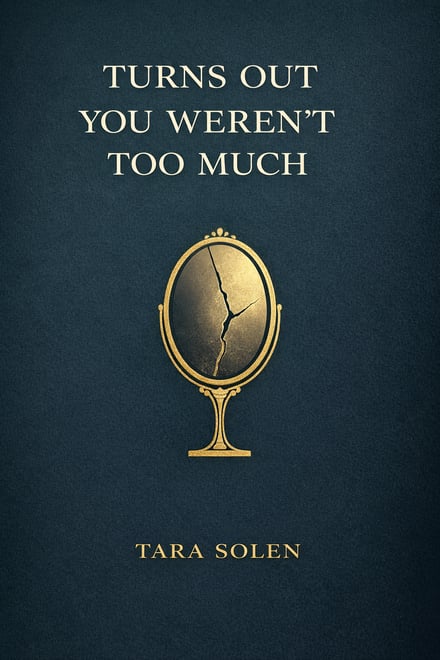
The eBook + the workbook.
Not just clarity. Not just validation. Both, plus the workbook that turns "WTF happened?" into "Never again."
The full breakdown:
Brutal clarity. Humour that hurts because it's true. Zero sugarcoating. And a workbook that takes the awareness and turns it into action.
- ✓The Emotional Neglect AuditEvery pattern named — from the invisible labour you've been doing to the moments you minimised because they "weren't that bad."
- ✓The Weaponized Incompetence PlaybookWhy it happens, how to recognise it in real time, and the single conversation that ends it (or ends the relationship that depends on it).
- ✓Fighting For Love vs Fighting Yourself to Survive ItThe clearest distinction in the book. Once you see this difference, you cannot un-see which one you've been doing.
- ✓The "Stop Auditioning" FrameworkHow to stop performing partnership and start being actually chosen. Spoiler: it requires being yourself in a way that scares the bare-minimum men away. That's the feature.
- ✓The Companion Workbook — "WTF Happened → Never Again"Reflection prompts, real-life audits, and exercises that turn the awareness into a permanent floor under your standards. The eBook explains it. The workbook integrates it.
- ✓The Higher Standards Recovery MapStep-by-step movement out of the audition — including how to stop apologising for needs that were always reasonable.
- ✓Tara's Signature Wit ThroughoutThe line between "this is so accurate I'm laughing" and "this is so accurate I'm crying" stays beautifully blurry from start to finish.
eBook + Workbook combo, one price.
The book you'll lend to three friends and never quite get back."Read it. Cried. Then blocked his number."
"I bought this at 11pm convinced I just needed to 'communicate better.' By 1am I had screenshotted half the chapters to my best friend, and by morning I'd packed a bag. Worth every cent."
"Tara called me out and held me at the same time. 'Weaponized incompetence' — I didn't have that phrase a week ago. Now I have it forever. The workbook is the part that made the difference."
"I read this six months post-breakup and FINALLY understood what I'd been through. Not narcissism. Not abuse. Something quieter and just as real. The relief of having a name for it was worth the price ten times over."
"The audition for partnership chapter wrecked me. I'd been performing for years and didn't realise the role was never open. I'm 38 and this is the first book that explained it. Buying for two friends as we speak."
"I laughed. I cried. I had a small breakdown over a glass of wine. Then I did the workbook and felt like myself again. Tara's voice is like the friend you wish you'd had at 24."
"I'm a couples therapist. I now recommend this to clients before our first session. It does what I couldn't in six weeks — lays the patterns out so plainly there's nothing left to argue about."
"Buy it. Read it. Then block his number.
(You're welcome.)"
Instant access · Read it tonight
The questions everyone asks first.
Direct answers, no fluff.
What is emotional neglect in a relationship?
Emotional neglect is the pattern of being physically present in a relationship while emotionally checked out — no curiosity, no repair, no real care for your inner world. It's not abuse with bruises. It's the slow erosion of feeling seen, valued and met. Turns Out You Weren't Too Much names every form it takes, from weaponized incompetence to the audition for partnership where you do all the unpaid labour.
What is weaponized incompetence?
Weaponized incompetence is when a partner deliberately performs uselessness — at chores, at emotional repair, at the basic logistics of adult life — so that you eventually stop asking and start doing it yourself. It looks like "I just don't know how to do it the way you like" or "you're better at this stuff." The book covers exactly why this happens, why you tolerated it, and how to stop.
Was I really too much in my relationship?
Almost certainly not. The "too much" label is the line that gets used when one person has needs and the other has the bare minimum to offer. You weren't too needy — he was under-equipped. You weren't too emotional — he was emotionally illiterate. The book maps the exact pattern so you can stop carrying a label that was never yours.
How do I know if I'm doing all the emotional labour?
Some clean signs: you manage his moods. You remember every birthday, appointment, kid's medication, social commitment. You initiate every difficult conversation. You apologise first, even when he was wrong. You're tired in a way that sleep doesn't fix. The book gives you a full audit and the language to name what's actually happening.
Do I need to be post-breakup to read this book?
No. Many readers read it before they leave — when they're still trying to decode "I'll try harder." Some read it during separation when they need to remember why. Some read it years later as part of integration. The book meets you wherever you are. The only requirement is that you're done being gaslit into gratitude for bare-minimum behaviour.
How is this different from other emotional neglect or breakup books?
Most breakup content either over-validates you or hands you a cookie-cutter recovery script. This one names the patterns specifically — emotional labour, weaponized incompetence, the audition for partnership, gaslighting-into-gratitude — and gives you a workbook that turns "WTF happened?" into "Never again." Tara writes with brutal clarity and the kind of humour that hurts because it's true.
What's the difference between this and the It Wasn't Love book?
It Wasn't Love. It Was Control in a Soulmate Costume. covers covert narcissism and coercive control — the more deliberate, manipulative end of the spectrum. Turns Out You Weren't Too Much covers emotional neglect, weaponized incompetence and the "just chill guy energy" end — the quieter, more socially-acceptable form of damage. Many readers buy both.
How do I access the eBook and workbook after purchase?
Instant online access via Payhip. Both files arrive the moment payment completes — readable on any device, yours to keep forever. No subscription, no app, no waiting.
Stop apologising for needs
that were always reasonable.
You've done the over-explaining. The over-functioning. The decoding. The waiting. None of it bought you the partnership you wanted, because the role was never open. This is the book that helps you walk off the stage.
"You weren't too much.
You were the only one doing the work."
— Tara Solen
This isn't a 'too much' problem.
It's an under-met problem.
You weren't too needy. You weren't too sensitive. You weren't too emotional. You were under-met by someone who let you audition for partnership instead of being one. The 'too much' label was the cheapest excuse he could find for not having to grow.
The bind: when someone refuses to meet you, your reasonable response looks like dysfunction to anyone who didn't see what you were responding to. You over-explained because he refused to understand. You asked twice because once didn't count. You softened your tone because his ego needed cushioning. None of that was 'too much.' It was the cost of trying to make a one-sided thing work.
This book names what almost destroyed you — without making you the problem for finally saying enough.
What does this book actually give you that the other relationship books didn't?
Permission to stop performing partnership for someone who was never going to show up. Names the audition you've been running. Names the cost. Gives you the framework for the after.
The chapter on realising he never met you
There is a passage that asks you to recall the last time you felt fully met by him — not appeased, not tolerated, not 'handled' — met. If you have to reach back years, that's the diagnosis. Most readers reach. Most readers don't find one.
The chapter doesn't make you feel stupid for staying. It names what staying actually cost — in language that finally lets you put the audition down.
You perform the relationship he can't actually be in. The audition runs forever. You blame yourself for the exhaustion.
You stop auditioning for a partnership that was never being offered. You give what you have to someone who can receive it — including yourself.
That's the work. Not less love. Recognising who can hold the love you have and who never could.
Other relationship books ≠ this.
Here's why.
A side-by-side. So you can stop wondering whether you've 'read this one already.'
You weren't too much.
He was too little. There's an enormous difference.